Rail Mounted Gantry (RMG) cranes play a critical role in modern container terminals, inland logistics hubs, and industrial yards where high-capacity, repetitive, and precise lifting operations are required. Traditionally, RMG cranes have relied on mechanical robustness and operator skill to deliver productivity and safety. However, with growing pressure on terminals and industrial operators to improve efficiency, reduce downtime, enhance safety, and lower operating costs, conventional control systems are no longer sufficient.
The integration of Internet of Things (IoT) technology into Rail Mounted Gantry cranes marks a significant shift from isolated mechanical equipment to intelligent, connected lifting systems. IoT-enabled RMG cranes leverage sensors, communication networks, data analytics, and smart control platforms to achieve real-time monitoring, predictive maintenance, operational optimization, and higher automation levels. This article explores how IoT technology is reshaping RMG crane design, operation, and lifecycle management.
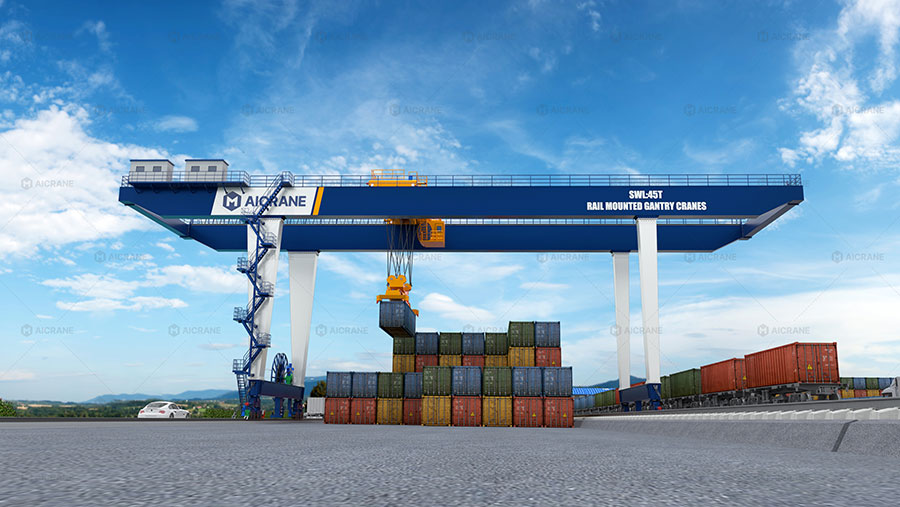
Understanding IoT in Rail Mounted Gantry Crane Systems
At its core, IoT refers to the interconnection of physical devices through sensors, software, and communication networks, enabling them to collect and exchange data. In an IoT-enabled RMG crane, critical mechanical, electrical, and operational components are continuously monitored and connected to a centralized control or cloud platform.
Unlike traditional RMG cranes that operate as standalone machines, IoT-enabled systems transform the crane into a data-generating asset. Parameters such as load weight, motor temperature, travel speed, power consumption, structural stress, and operational cycles are captured in real time. This data forms the foundation for intelligent decision-making, automated responses, and long-term performance optimization.
Key IoT Components in RMG Crane Technology
Sensor Networks and Data Acquisition
Sensors are the backbone of IoT-enabled RMG cranes. Load sensors monitor lifting forces and prevent overload conditions, while position encoders track trolley travel, hoisting height, and container gantry crane movement along the rails. Vibration sensors and strain gauges detect abnormal structural behavior, helping identify fatigue or misalignment issues at an early stage.
Environmental sensors, such as wind speed and temperature monitors, are particularly important for outdoor RMG operations. These sensors allow the system to adjust operating parameters automatically or issue warnings when conditions exceed safe limits.
Edge Devices and Control Units
Data collected by sensors is processed by edge devices or intelligent controllers installed within the crane’s electrical system. These units perform initial data filtering, real-time calculations, and immediate control actions, such as activating alarms or limiting crane motions.
By processing critical data locally, edge devices ensure rapid response times and maintain operational safety even if external network connectivity is temporarily interrupted.
Industrial Communication Networks
Reliable communication is essential for IoT-enabled RMG cranes. Industrial Ethernet, wireless networks, and fieldbus systems connect sensors, controllers, and supervisory platforms. Data is transmitted securely to terminal operating systems (TOS), maintenance management systems, or cloud-based analytics platforms.
This connectivity allows gantry crane data to be shared across the entire logistics ecosystem, enabling coordination with yard management systems, automated guided vehicles (AGVs), and inventory tracking platforms.
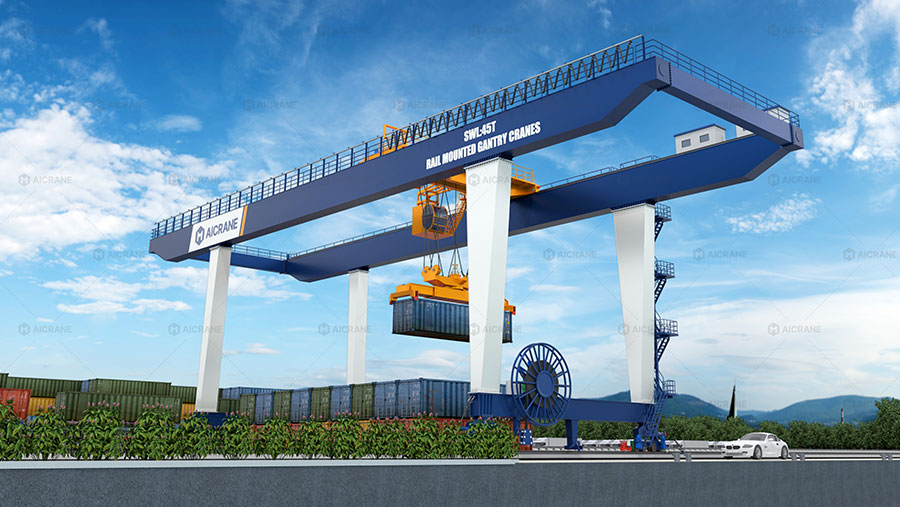
Predictive Maintenance and Asset Health Monitoring
One of the most valuable applications of IoT technology in RMG cranes is predictive maintenance. Traditional maintenance strategies rely on fixed schedules or reactive repairs after failures occur. IoT-enabled systems, however, continuously analyze equipment condition and usage patterns.
By monitoring parameters such as motor current, gearbox vibration, brake wear, and wire rope condition, the system can identify early signs of degradation. Maintenance teams receive alerts when components approach predefined thresholds, allowing interventions to be planned before failures cause downtime.
Predictive maintenance not only reduces unexpected breakdowns but also extends component life and optimizes spare parts inventory. For large container terminals operating multiple RMG cranes, this translates into significant cost savings and improved equipment availability.
Operational Efficiency and Performance Optimization
IoT technology enables RMG cranes to move beyond basic lifting and traveling functions toward data-driven performance optimization. By analyzing operational data, operators can identify inefficiencies such as excessive idle time, suboptimal travel paths, or uneven workload distribution between cranes.
Real-time dashboards provide visibility into crane utilization, cycle times, and energy consumption. Advanced analytics can recommend optimized operating parameters, such as acceleration profiles and speed limits, to improve throughput while minimizing mechanical stress.
In semi-automated or fully automated terminals, IoT-enabled RMG cranes integrate seamlessly with higher-level automation systems. The crane becomes part of a coordinated, intelligent yard operation where movements are planned and executed with minimal human intervention.
Enhanced Safety Through Intelligent Monitoring
Safety is a top priority in RMG crane operations, particularly in high-traffic container yards. IoT-enabled safety systems significantly enhance risk prevention and incident response capabilities.
Load monitoring sensors prevent overload conditions and ensure compliance with design limits. Anti-sway systems, supported by real-time motion data, automatically stabilize loads during hoisting and trolley travel. Collision avoidance systems use position data to detect potential conflicts between cranes, vehicles, or infrastructure.
Additionally, IoT platforms can record and analyze safety-related events, such as emergency stops or abnormal operating behaviors. This information helps safety managers identify recurring risks, improve operator training, and refine operating procedures.
Energy Management and Sustainability Benefits
Energy efficiency is increasingly important for ports and industrial operators aiming to reduce carbon emissions and operating costs. IoT-enabled RMG cranes provide detailed insights into power consumption patterns, enabling targeted energy optimization.
By monitoring energy usage across different operating modes, the system can identify opportunities for energy savings, such as reducing peak demand or optimizing regenerative braking performance. In electrified RMG cranes, IoT data supports smarter power distribution and integration with renewable energy sources.
These capabilities align with global sustainability goals and help terminal operators meet environmental regulations while maintaining high productivity levels.
Integration with Digital Twin and Smart Port Systems
IoT technology also serves as the foundation for digital twin applications in RMG crane systems. A digital twin is a virtual replica of the physical crane, continuously updated with real-time data from IoT sensors.
This virtual model allows engineers to simulate operating scenarios, evaluate design changes, and test control strategies without disrupting live operations. Digital twins support long-term planning, capacity expansion studies, and lifecycle management decisions.
In smart ports and logistics hubs, IoT-enabled RMG cranes become key nodes in a broader digital ecosystem. Data exchange between cranes, terminal systems, and enterprise platforms enables end-to-end visibility and smarter decision-making across the entire supply chain.
Challenges and Considerations in IoT Implementation
Despite its advantages, implementing IoT technology in RMG cranes requires careful planning. Cybersecurity is a critical concern, as connected systems must be protected against unauthorized access and data breaches. Robust network design, secure protocols, and regular system updates are essential.
Data management is another challenge. Large volumes of operational data must be processed, stored, and analyzed effectively to deliver actionable insights. Without proper analytics and system integration, the full value of IoT technology may not be realized.
Finally, successful adoption depends on workforce readiness. Operators and maintenance personnel must be trained to interpret IoT data and integrate new workflows into daily operations.
Future Outlook for IoT-Enabled RMG Crane Technology
As IoT technology continues to evolve, its role in Rail Mounted Gantry crane systems will expand further. Advances in artificial intelligence and machine learning will enable more autonomous decision-making, from adaptive control strategies to fully automated maintenance planning.
Integration with 5G networks will improve communication reliability and latency, supporting higher levels of automation and real-time coordination. Over time, IoT-enabled RMG gantry cranes for port will transition from smart machines to self-optimizing systems that continuously learn and improve.
Conclusion
IoT-enabled Rail Mounted Gantry crane technology represents a fundamental shift in how heavy lifting equipment is designed, operated, and maintained. By transforming RMG cranes into intelligent, connected assets, IoT technology enhances efficiency, safety, reliability, and sustainability across container terminals and industrial yards.
For operators seeking to remain competitive in an increasingly digital and automated logistics environment, investing in IoT-enabled RMG crane systems is no longer a future concept but a strategic necessity. As adoption grows, IoT will continue to redefine the performance standards and operational possibilities of Rail Mounted Gantry cranes worldwide.